
Infineon BSC010NE2LS IGBT: Datasheet Analysis and Application Circuit Design
The Infineon BSC010NE2LS is a representative component of Infineon's latest generation of TrenchStop™ IGBTs, designed specifically for low-power switching applications. This analysis delves into the device's key parameters from its datasheet and outlines the critical considerations for designing a robust application circuit.
Datasheet Analysis: Key Parameters
A thorough review of the datasheet reveals the strengths of this N-channel IGBT in low-voltage (up to 600V) scenarios.
Voltage Ratings: The device boasts a collector-emitter voltage (V_CES) of 600V, making it suitable for a wide range of offline switch-mode power supplies (SMPS), power factor correction (PFC) stages, and motor drive inverters operating from universal mains input (85 - 265 VAC).
Current Handling: Its continuous collector current (I_C) is 10A at 100°C, a significant rating for its compact DPAK (TO-252) surface-mount package. This highlights its excellent power density.
Saturation Voltage (V_CE(sat)): A crucial metric for conduction losses, the V_CE(sat) is typically 1.55V at I_C = 5A and T_j = 25°C. This low saturation voltage is a direct result of the TrenchStop™ technology, which enhances conductivity and improves overall efficiency by minimizing on-state power dissipation.
Switching Performance: The device is optimized for fast switching, with typical turn-on and turn-off times in the tens of nanoseconds range. This allows for high-frequency operation, which in turn enables the design of smaller and lighter magnetic components (inductors and transformers) in power supplies.
Thermal Characteristics: The low thermal resistance from junction to case (R_thJC) of 2.5 K/W is vital. It indicates efficient heat transfer from the silicon die to the package surface, allowing the designer to effectively manage junction temperature (T_j) and maximize reliability.
Application Circuit Design: A Buck Converter Example
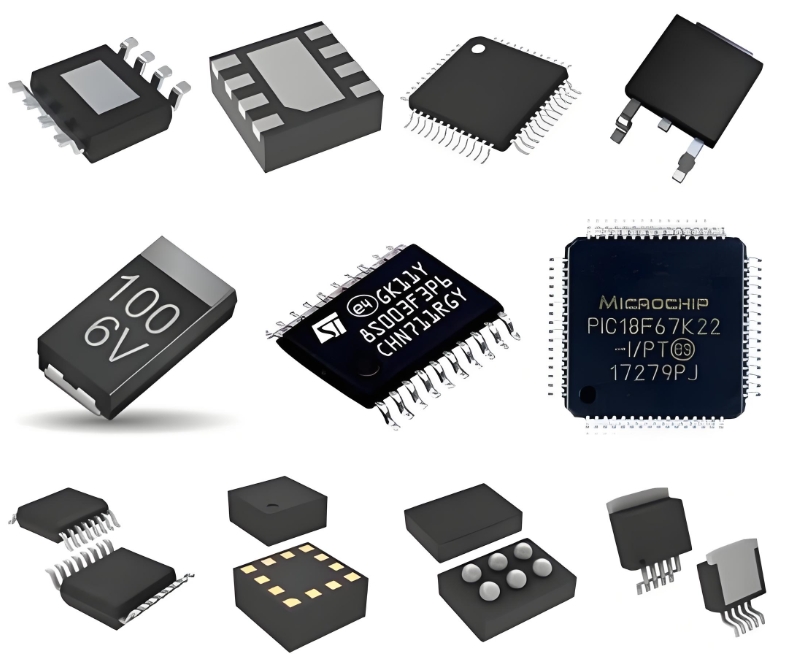
Designing a circuit with the BSC010NE2LS, such as a synchronous buck converter, requires attention to several key areas:
1. Gate Driving: The IGBT requires a sufficiently high gate-emitter voltage (typically +15V) to fully turn on and achieve the advertised V_CE(sat). A dedicated gate driver IC is highly recommended to provide the necessary current to quickly charge and discharge the input gate capacitance (C_ies), minimizing switching transitions and losses. A negative turn-off voltage (e.g., -5 to -8V) can be applied for enhanced noise immunity and to prevent spurious turn-on caused by Miller effect.
2. Snubber and Clamping Circuits: Due to the fast switching speed, circuit parasitics (stray inductance) can cause voltage spikes across the collector and emitter. An RC snubber network across the IGBT or a clamping circuit like a TVS diode may be necessary to suppress these spikes and keep the V_CE within the maximum rated limits.
3. Freewheeling Diode: In non-synchronous topologies like a standard buck converter, an external ultra-fast recovery diode is required to provide a path for the inductive load current when the IGBT is off. The reverse recovery characteristics of this diode will significantly impact the overall switching losses of the circuit.
4. Thermal Management: Calculating power dissipation (P_loss = P_cond + P_sw) is essential. The combined conduction and switching losses must be used to size an adequate heatsink based on the package's thermal resistance (R_thJA) and the maximum ambient operating temperature to ensure the junction temperature (T_j) remains below the maximum 150°C specified in the datasheet.
ICGOOODFIND: The Infineon BSC010NE2LS IGBT stands out as a highly efficient and robust solution for compact, low-to-medium power applications. Its low saturation voltage and fast switching speed, enabled by TrenchStop™ technology, make it an ideal choice for designers seeking to improve power density and efficiency in modern switch-mode power supplies and motor drives. Proper attention to gate driving, protection, and thermal management is paramount to unlocking its full performance potential in any application circuit.
Keywords:
IGBT
TrenchStop™ Technology
Saturation Voltage (V_CE(sat))
Switching Losses
Thermal Management

